
Commercial Roof Leak and Water Damage Claims in Fort Lauderdale – Protecting Your Building and Business Income
This page is for Fort Lauderdale business owners dealing with a commercial roof leak or water damage who want clear, practical guidance on insurance claims, business interruption, and how to protect both the building and the income it generates.
Commercial Roof Leaks, Water Damage, and Your Bottom Line
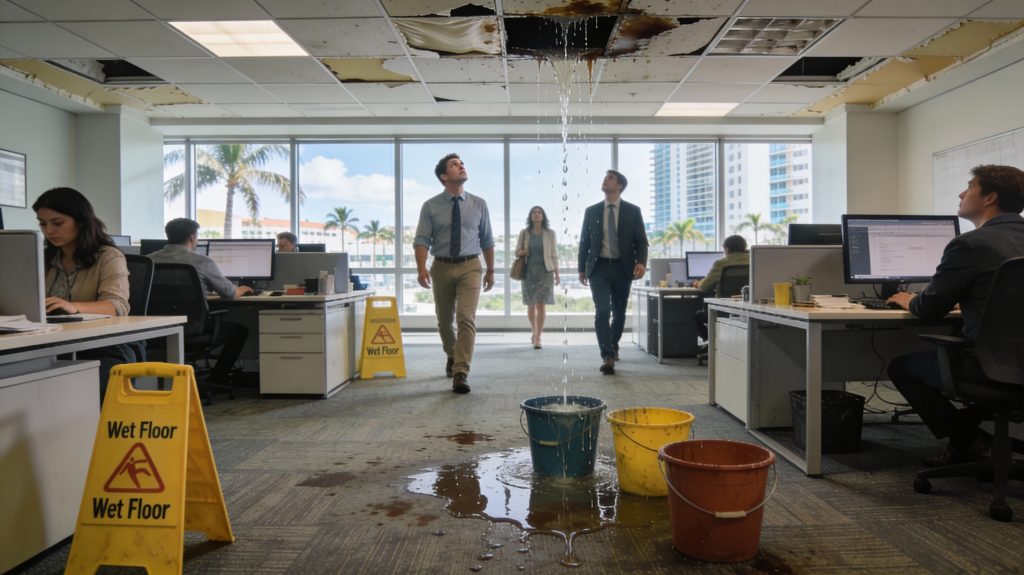
A roof leak in a commercial building is rarely just a drip in a hallway. Once water gets past the roof system, it can damage ceilings, walls, electrical systems, inventory, machinery, and tenant spaces. In Fort Lauderdale’s climate, repeated storms and heavy rain also increase the risk of mold and long-term structural problems.
For many businesses, the real hit comes from downtime. When parts of the building are unsafe or unusable, operations slow or stop, and that is where business interruption coverage can become just as important as the physical damage portion of your policy.
The takeaway is that a commercial roof leak is both a property problem and a business income problem, and your claim strategy needs to address both.
What to Do First When You Discover a Commercial Roof Leak
When you first notice signs of a roof leak in your office, warehouse, or retail space, focus on safety, mitigation, and documentation. Fast action can protect your rights under a commercial property damage insurance claim and reduce future disputes about “failure to mitigate.”
Protect people and property
- Move employees and customers away from wet or unsafe areas.
- Relocate equipment, stock, or records that could be damaged by continued water exposure.
Reduce further damage
- Use buckets, plastic sheeting, and temporary coverings to control active leaks.
- If safe, shut down power to affected areas where water may reach electrical systems.
Start a documentation file
- Take date-stamped photos and videos of the leak source (if visible), ceiling stains, damaged contents, and any temporary repairs.
- Keep receipts for emergency repairs or drying services; these can support your commercial roof leak insurance claim and any extra expense coverage.
In summary, early safety measures and thorough documentation set the foundation for a stronger commercial roof leak and water damage claim.
Are Commercial Roof Leaks and Water Damage Covered by Insurance?
Coverage for a commercial roof leak depends on what caused the leak and how your commercial policy is written. Many commercial property policies cover sudden and accidental water damage from covered causes, such as wind-driven rain or storm damage to the roof, but exclude long-term wear, poor maintenance, or construction defects.
Relevant coverage concepts often include:
Commercial building roof leak coverage
- Damage to the roof and building structure from a covered peril (for example, wind, hail, or a fallen object) may be included under commercial roof damage insurance.
- Resulting interior water damage is often treated as part of a commercial property water damage claim.
Contents and equipment
- Many policies cover damage to business personal property such as inventory, computers, machinery, and furniture when damaged by a covered water event.
Business interruption coverage
- If your operations are shut down or reduced while repairs are made, business interruption coverage may compensate you for lost income and certain continuing expenses, depending on the policy language.
The takeaway is that the “how and why” of the leak, along with the exact wording of your commercial policy, determine what is covered and what the insurance company may try to exclude.
How to File a Commercial Roof Leak Insurance Claim for Water Damage and Business Income Loss
Filing a commercial roof leak insurance claim is more than just calling the carrier. A structured approach helps protect both your building and your cash flow.
A typical claim roadmap includes:
Review your policy
- Identify sections on commercial building coverage, business personal property, and business interruption coverage.
- Note time limits for notice of loss and proof of loss documentation.
Notify the insurer
- Report the loss as soon as reasonably possible, describing the date, suspected cause, and areas affected.
- Ask for a claim number and keep a log of all communications.
Document property damage and operational impact
- Take photos and videos of roof damage, ceiling leaks, damaged contents, and any areas closed to business.
- Compile sales reports, booking calendars, or production records showing drops in revenue tied to the damage period for any business interruption claim.
Coordinate inspections
- Roof moisture inspection reports, contractor estimates, and industrial hygienist reports (for mold or water intrusion) can strengthen your position in property damage assessment.
Consider representation
- Many Fort Lauderdale business owners choose to work with professionals who handle commercial property damage insurance claims every day to prepare proof of loss documentation and negotiate with the insurance adjuster.
If you want help understanding your options, you can call Triumph Consulting at
(954)-592-7162,
email
claims@wegetyoupaid.com,
or request a complimentary consultation and free inspection at
https://triumphfl.com/contact-us/.
In summary, treating the claim as a project—from policy review through inspection and negotiation—can significantly improve both your building recovery and your financial recovery.
Common Causes of Commercial Roof Leaks in Fort Lauderdale
Fort Lauderdale’s mix of intense sun, heavy rain, and tropical storms puts constant stress on commercial roofs, especially flat roofs common on offices, warehouses, and retail centers.
Frequent causes of roof leaks in commercial buildings include:
Storm-related damage
- High winds, wind-driven rain, and flying debris can damage roof membranes, flashing, or rooftop equipment, leading to storm damage to a commercial roof.
Aging and thermal movement
- UV exposure and temperature swings can crack sealants and seams, particularly on flat roofs, making them more vulnerable to water intrusion in commercial buildings.
Drainage and ponding
- Clogged drains and ponding water can accelerate deterioration of roofing materials and increase leak risk.
The takeaway is that understanding the likely cause of your roof leak helps frame both the repair plan and how the insurance company should evaluate coverage.
Roof Leaks, Business Interruption, and Lost Income
When leaks force you to close a showroom, production area, or tenant space, the financial impact often spreads quickly—reduced revenue, ongoing payroll, rent, and other operating costs. Business interruption coverage is designed to bridge that gap when the shutdown stems from a covered property loss.
Key concepts to discuss with a professional include:
Triggering business interruption coverage
- Typically, there must be covered physical damage to insured property that causes a suspension of operations.
Measuring loss of business income
- Loss calculations may use prior months’ revenue, seasonal trends, and forward bookings to estimate what your income would have been without the loss.
Extra expense coverage
- Policies sometimes reimburse additional costs you incur to reduce downtime, such as temporary relocation, expedited repairs, or temporary equipment rentals.
The takeaway is that roof leaks can cause both visible damage and invisible profit loss, and both pieces should be evaluated in a well-documented commercial roof leak insurance claim.
Leased Commercial Space: Who Pays for Water Damage?
In leased commercial properties, responsibilities for roof leak repairs and interior build‑out damage can be split between landlord and tenant under the lease and the respective insurance policies.
Consider these points when a leak affects a leased space:
Lease language
- Many leases assign roof structure and exterior to the landlord while interior improvements and business personal property are handled by the tenant.
- Some leases require tenants to maintain their own business property insurance and business interruption coverage.
Practical steps
- Notify both the building owner or property manager and your own carrier when a loss occurs.
- Coordinate inspections so each side documents its portion of the damage and responsibilities.
The takeaway is that in a leased commercial building, responsibility for a roof leak and resulting water damage is usually shared based on the lease and the policies in place, so it pays to get clarity early.
Why Work with a Licensed Florida Public Adjuster on Commercial Roof and Water Damage Claims?
Commercial claims often involve multiple coverage parts, complex policy language, and high-dollar impacts on your operations. Many Florida businesses choose to work with a licensed public adjuster who focuses on representing policyholders—not the insurance company—on commercial claims.
A public adjuster who regularly handles commercial property damage insurance claims can:
- Interpret commercial insurance policy exclusions and endorsements that affect roof leak liability and insurance coverage.
- Coordinate property damage assessment, roof moisture inspection reports, and detailed estimates to support a full repair rather than a quick patch.
- Prepare and present proof of loss documentation and negotiate with the insurance adjuster to address under-valued or denied portions of the claim.
Triumph Consulting has an office near Fort Lauderdale in Oakland Park and focuses on helping Florida policyholders get paid what they deserve on residential and commercial claims. You can review real client experiences on the Triumph Consulting Reviews page at
https://triumphfl.com/reviews/
and schedule a complimentary consultation and free inspection at
https://triumphfl.com/contact-us/.
The takeaway is that having a professional focused on your side of the claim can make a significant difference in both the speed and size of your commercial roof leak and water damage recovery.
Commercial Roof Leak Claim Focus Areas
The table below summarizes key focus areas for commercial roof leak and water damage claims.
| Focus Area | What It Covers | Why It Matters |
|---|---|---|
| Property Damage | Roof, structure, ceilings, walls, electrical systems, and interior finishes. | Repairs the building so it is safe and functional again. |
| Contents & Equipment | Inventory, machinery, computers, furniture, and other business personal property. | Replaces or repairs the tools and items needed to operate the business. |
| Business Interruption | Lost income and certain continuing expenses during covered downtime. | Protects cash flow when operations are reduced or suspended. |
| Extra Expense | Temporary relocation, expedited repairs, and temporary equipment rentals. | Helps you reduce downtime and resume operations more quickly. |
Frequently Asked Questions: Commercial Roof Leak and Water Damage Claims
Does business insurance cover roof leaks or water damage in a commercial building?
Coverage depends on the cause of the leak and your policy language, but many commercial property policies cover sudden and accidental water damage from covered perils while excluding long-term wear and maintenance issues.
Can roof leaks cause business income loss claims?
Yes. If a covered roof leak forces you to reduce or suspend operations, business interruption coverage may help replace lost income and certain continuing expenses, subject to policy terms and waiting periods.
What are the steps to document water damage in a commercial building?
Documenting typically includes photos and videos of all affected areas, moisture readings or inspection reports, contractor estimates, and business records showing the operational impact or downtime.
How long do I have to file a commercial roof leak insurance claim in Florida?
Florida has specific time limits for property damage claims, and policies often include their own deadlines for notice and proof of loss, so it is important to act promptly and confirm the time frames in your policy.
What should I do if my commercial property water damage claim is denied or underpaid?
A denial or low offer can sometimes be challenged by strengthening documentation, obtaining independent estimates, and having a professional review whether the insurer properly applied the policy language.
What is the role of a roof moisture inspection report in a commercial claim?
Roof moisture surveys and inspection reports can help show the extent of damage below the surface, supporting full repair or replacement when the carrier is pushing for minimal patch work.
How does business interruption coverage work after a roof leak?
Business interruption coverage usually starts after a waiting period once covered property damage causes a suspension of operations and can continue until the business is reasonably restored, sometimes with extended business income options.
Who represents business owners in commercial insurance disputes about roof leaks?
Business owners may turn to licensed Florida public adjusters or attorneys who focus on commercial insurance disputes to help interpret the policy, gather evidence, and push back against unfair claim decisions.
How can I check if my commercial policy has exclusions that affect roof leak and water intrusion coverage?
Review the exclusions and endorsements sections of your policy, paying close attention to wear and tear, long-term seepage, mold, and roofing limitations, and consider having a professional explain how those clauses apply to your building.
Denied or Underpaid Commercial Roof Leak Claims
If your commercial roof leak or water damage claim is denied or underpaid, you are not necessarily at the end of the road. Strengthening your documentation, obtaining additional expert inspections, and having a professional review your policy can create a stronger basis to challenge the decision.
A licensed Florida public adjuster or attorney can help you package evidence, identify misapplied exclusions, and negotiate for a more accurate valuation of your loss.
Key Policy Exclusions to Watch For
Commercial policies often contain exclusions and limitations that can significantly affect roof leak and water intrusion claims. Understanding these provisions before and after a loss helps you avoid surprises.
- Wear and tear or deterioration clauses that limit coverage for aging roofs.
- Long-term seepage or repeated leakage exclusions that may affect slow, ongoing leaks.
- Mold, fungi, or bacteria limitations that cap related remediation costs.
- Roofing-specific endorsements that restrict coverage based on roof age or material.
Reviewing these exclusions with a knowledgeable professional can clarify how they apply to your building and your specific loss.
When to Get Help Negotiating with the Insurance Adjuster
Negotiating with an insurance adjuster on a commercial claim can become challenging when the carrier disputes the cause of loss, argues that damage is pre-existing, or significantly undervalues repairs and business interruption losses.
Consider bringing in a public adjuster or attorney when you see large gaps between your contractor estimates and the insurer’s numbers, when communications stall, or when you receive a denial or partial denial that does not match the damage you are seeing on site.
How to Get Started with Triumph Consulting
If you are dealing with a commercial roof leak or water damage in the Fort Lauderdale area and want help with your insurance claim, Triumph Consulting is available to review your situation and explain your options.
You can call Triumph Consulting at
(954)-592-7162,
email
claims@wegetyoupaid.com,
or use the contact form at
https://triumphfl.com/contact-us/
to request a free inspection and consultation about your commercial property damage insurance claim in the Fort Lauderdale area.